Each format works a little differently. Here is what to expect.
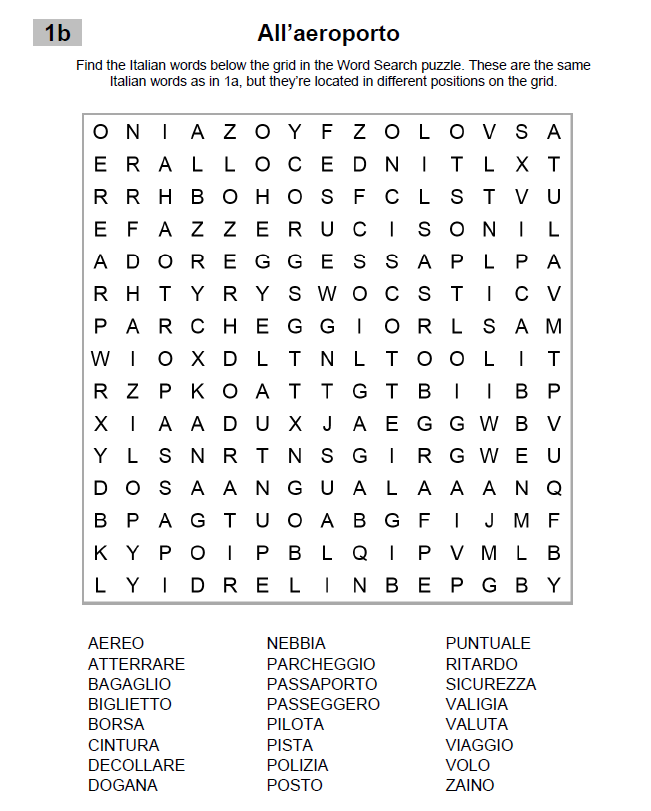
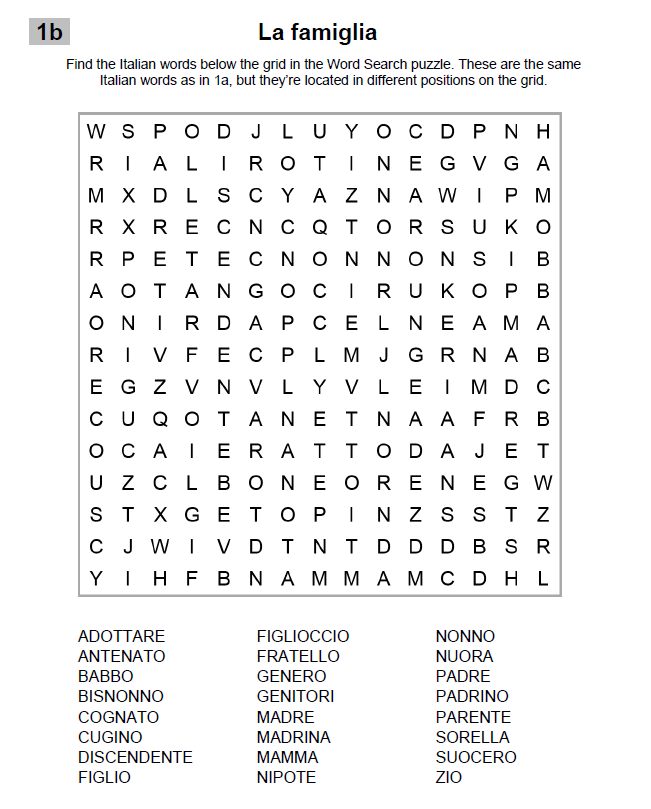
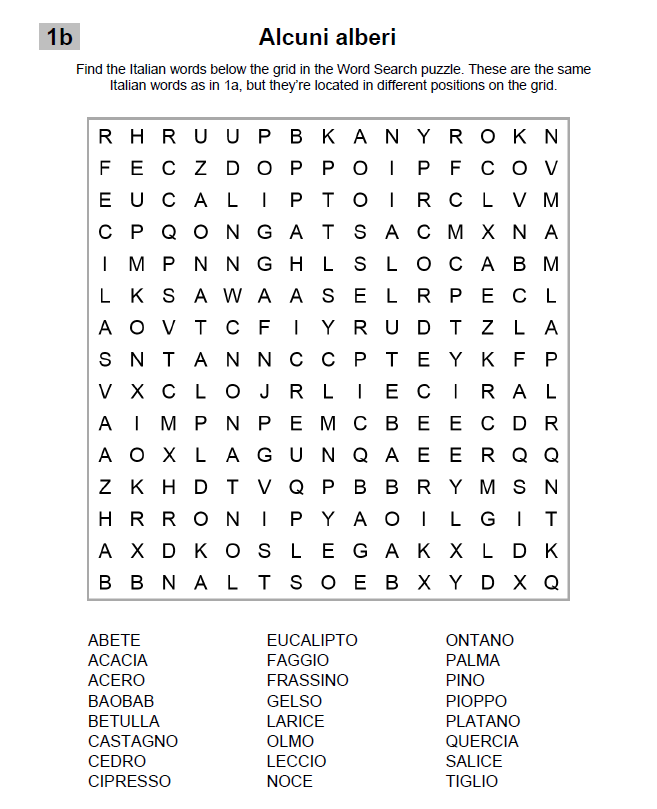
Word searches — Italian words are hidden in the grid and can run in any direction. Most word searches actually come as two puzzles in one. Version a, the more challenging one, lists the words in English below the grid, so you have to translate each one into Italian before you can find it, or check the Italian list in version b on the next page if you need a prompt. Version b lists the words in Italian so you can search directly. Both versions use the same words but place them differently in the grid, so working through both gives you two genuinely different puzzles and a second encounter with the same vocabulary.
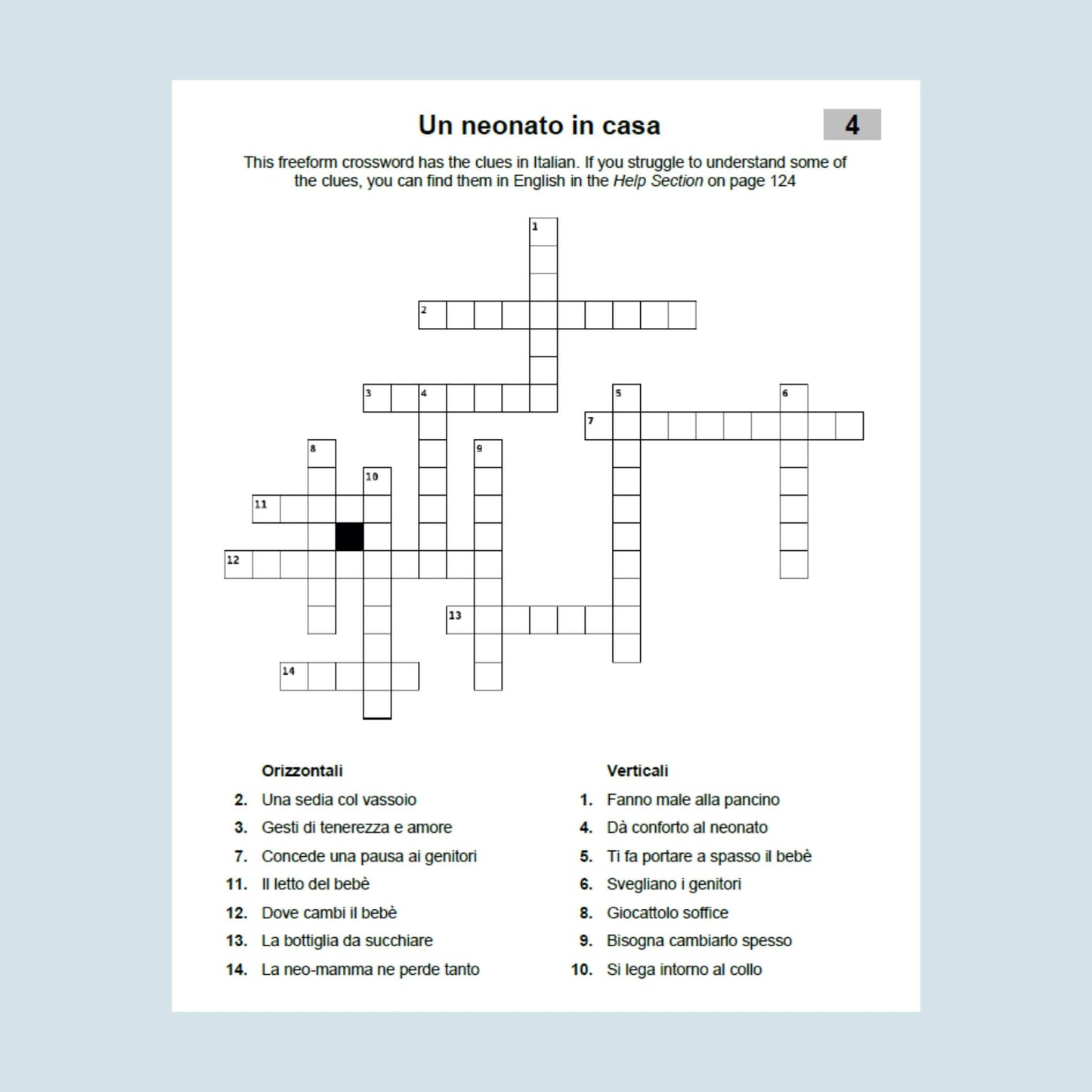
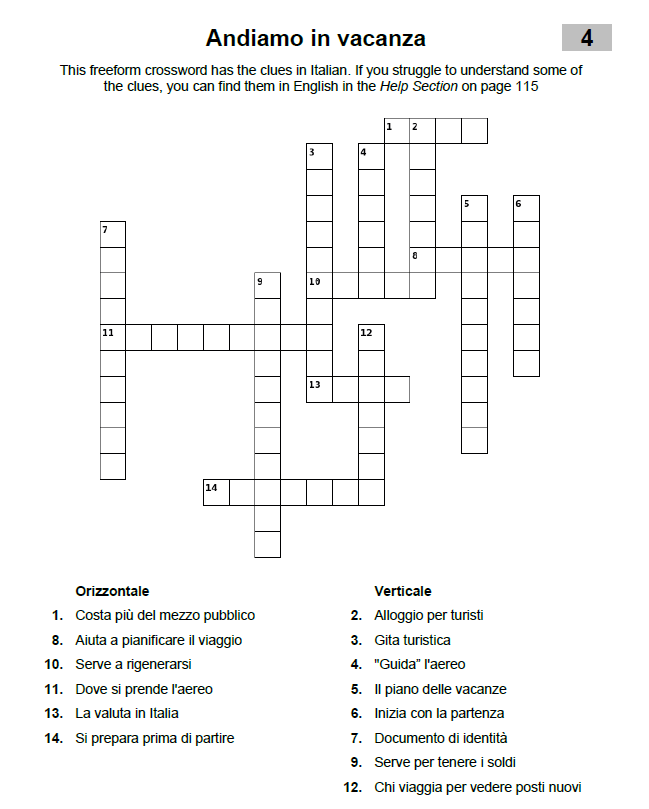
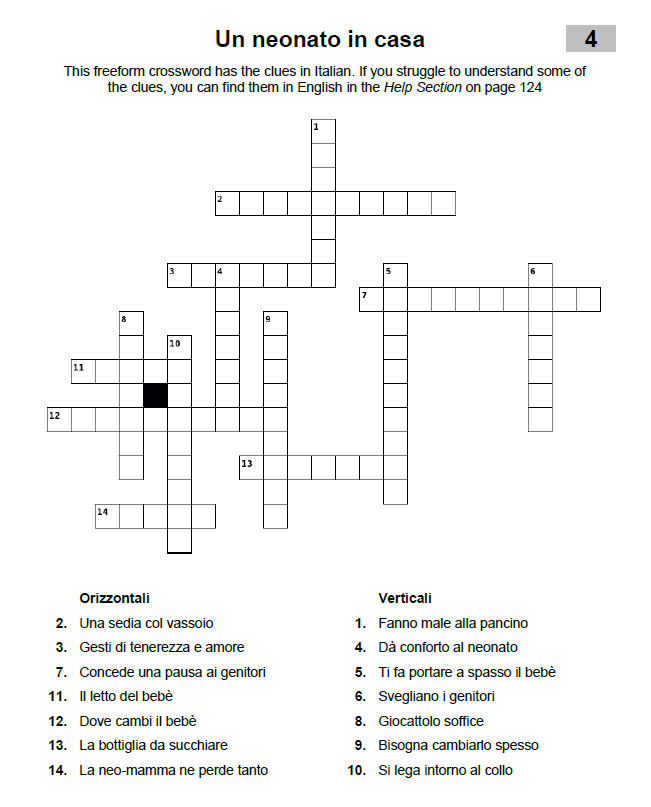
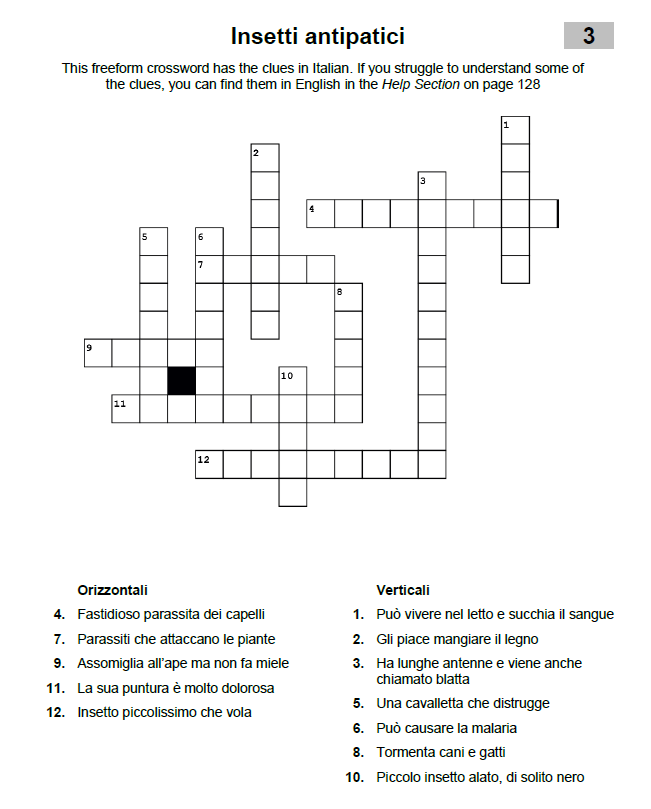
Freeform crosswords — Clues are written in Italian. If you find a clue difficult to understand there is an English help section at the back, though the English version is not always a literal translation. This is the format closest to how language works in real life: a meaning prompts you to find the word, rather than the word being handed to you.
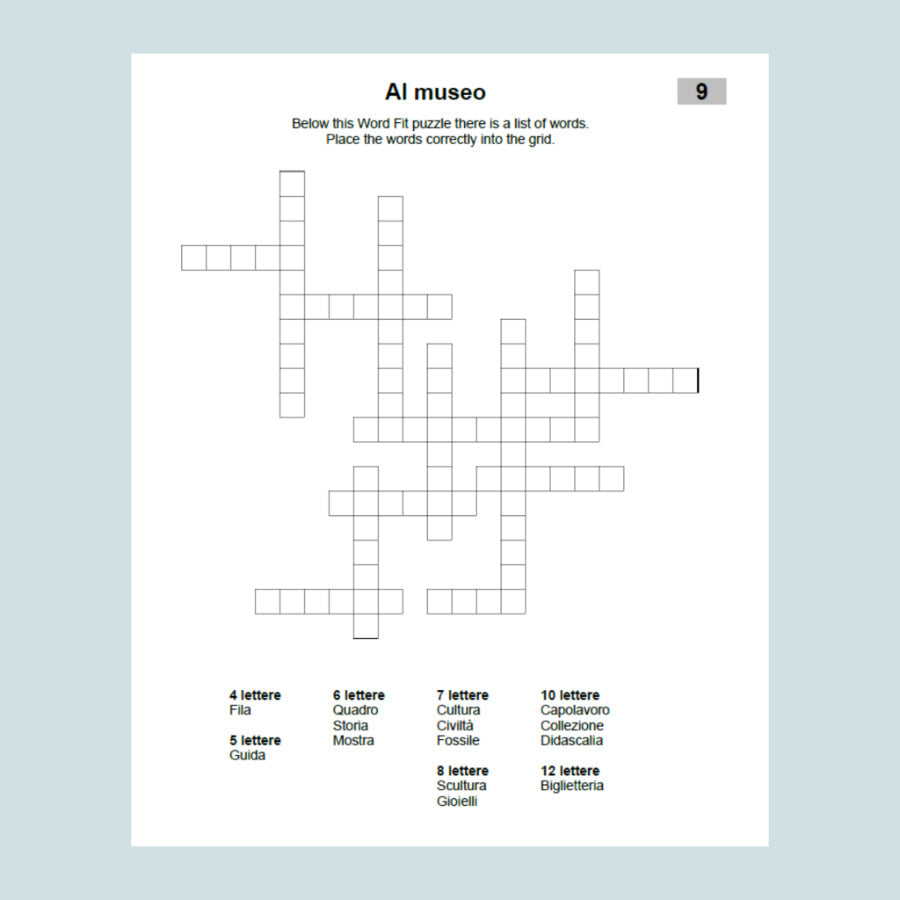
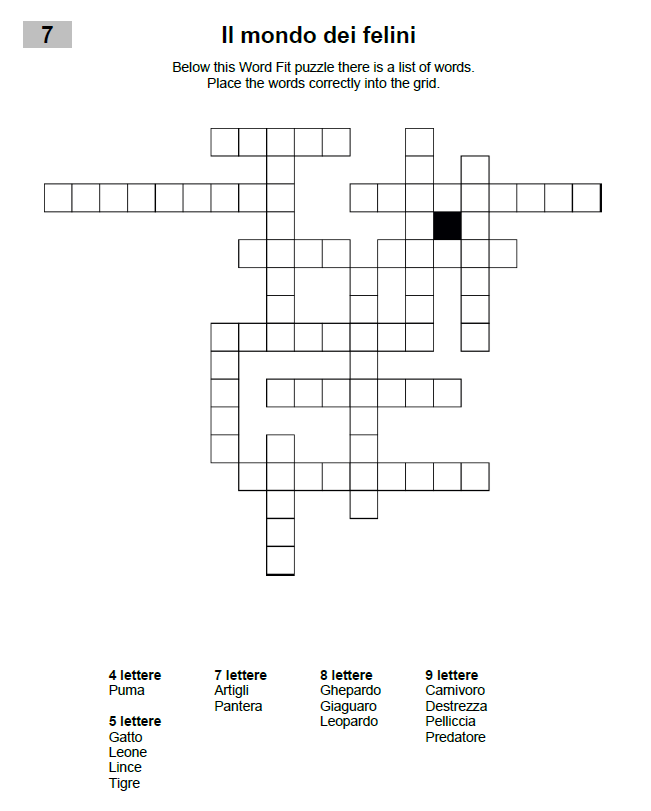
Word fit puzzles — A list of words is provided and your task is to place each one correctly in the grid based on letter count and intersections. As you work through the puzzle, you read and re-read the word list repeatedly, which builds familiarity with how the words look and how they are spelled: a gentler kind of exposure than the more demanding formats, but a useful one.
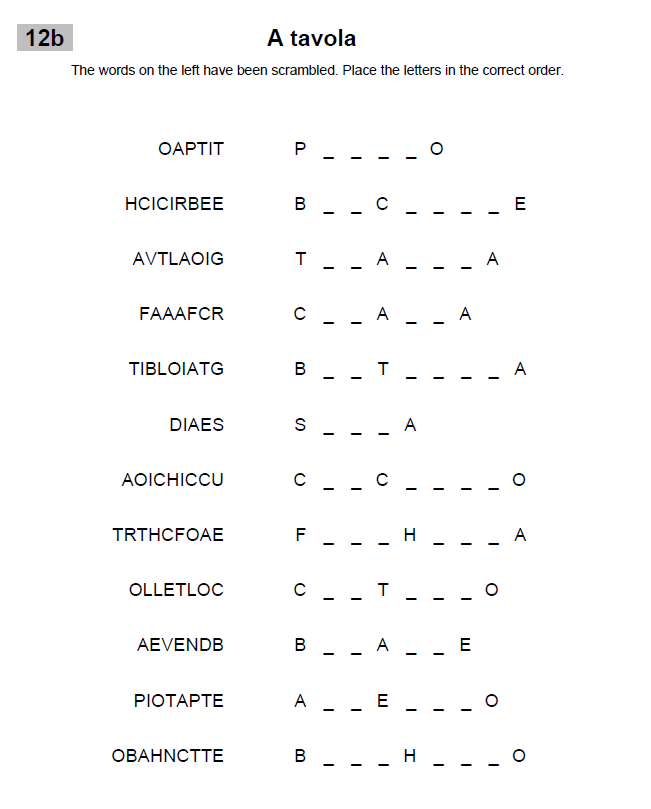
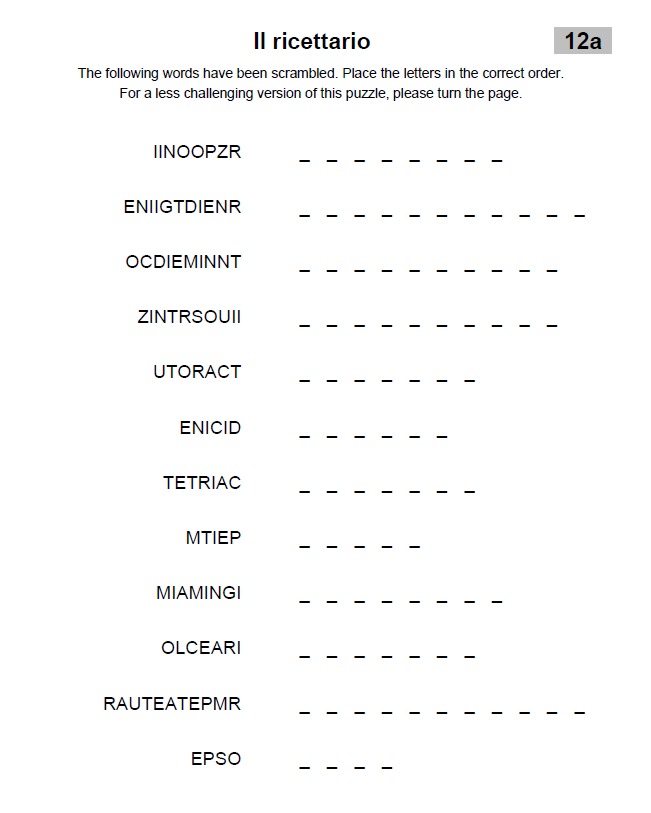
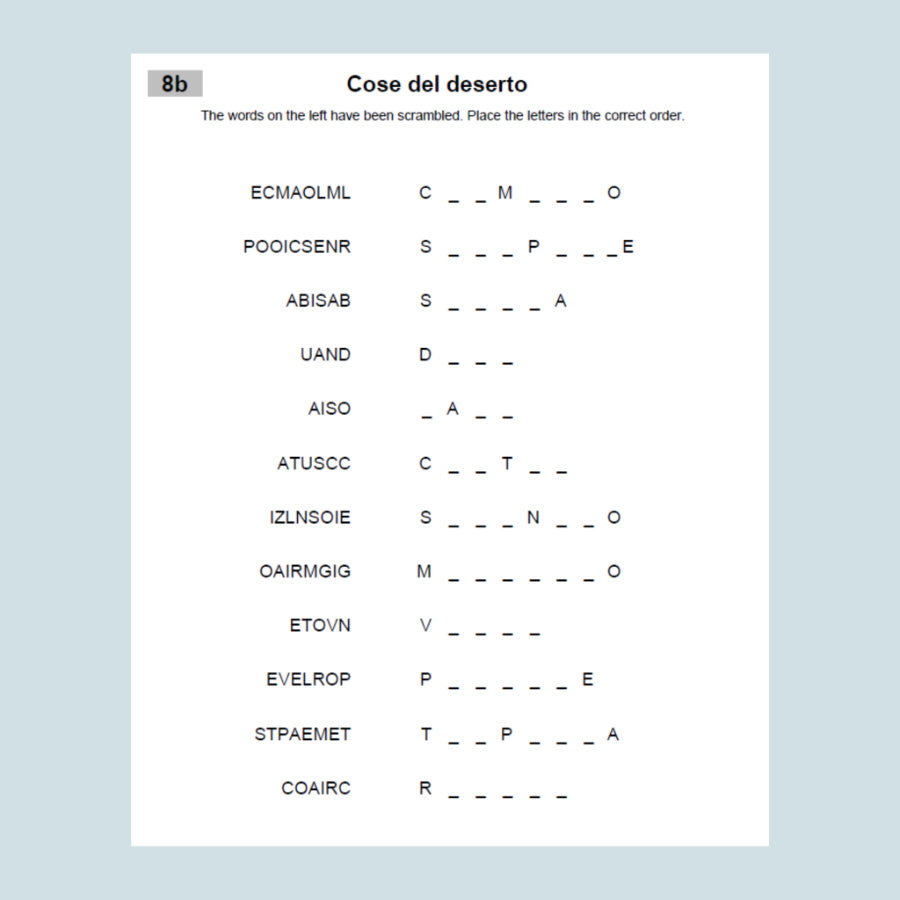
Word scrambles — Scrambled letters need to be placed in the correct order to reveal an Italian word. These come in two varieties: one where some letters are already provided as a guide, and a trickier version with no help at all. Reconstructing a word from its parts makes you think carefully about how it is built, which tends to reinforce spelling more actively than simply reading a word.
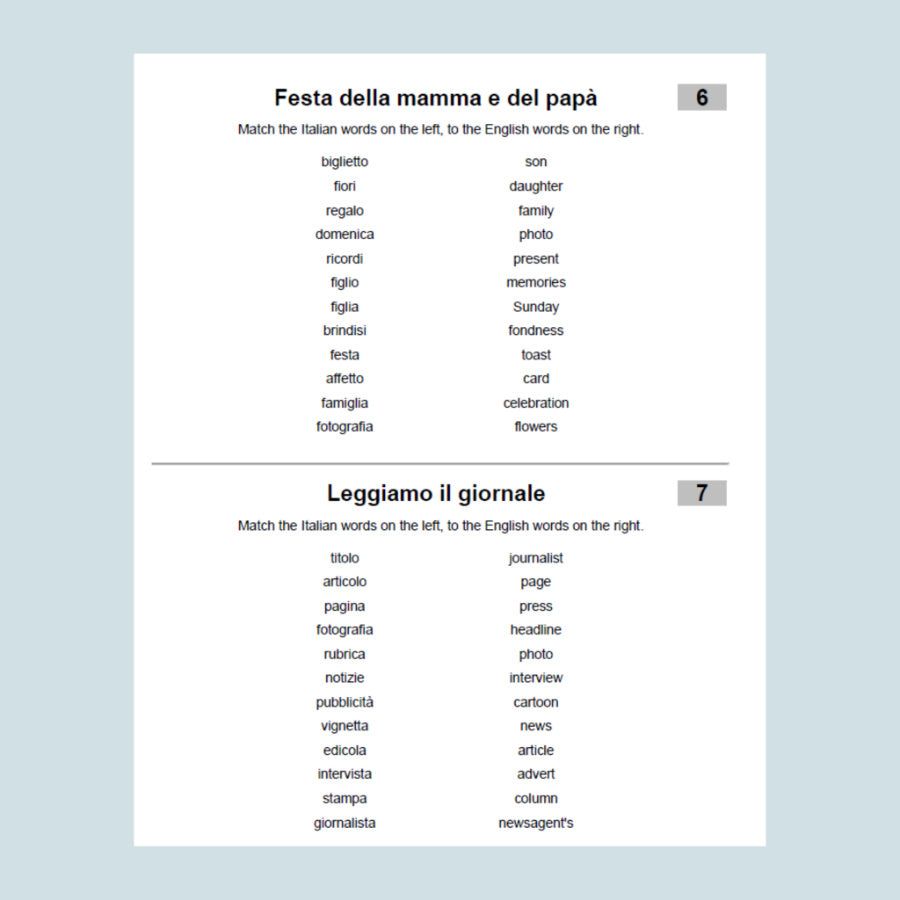
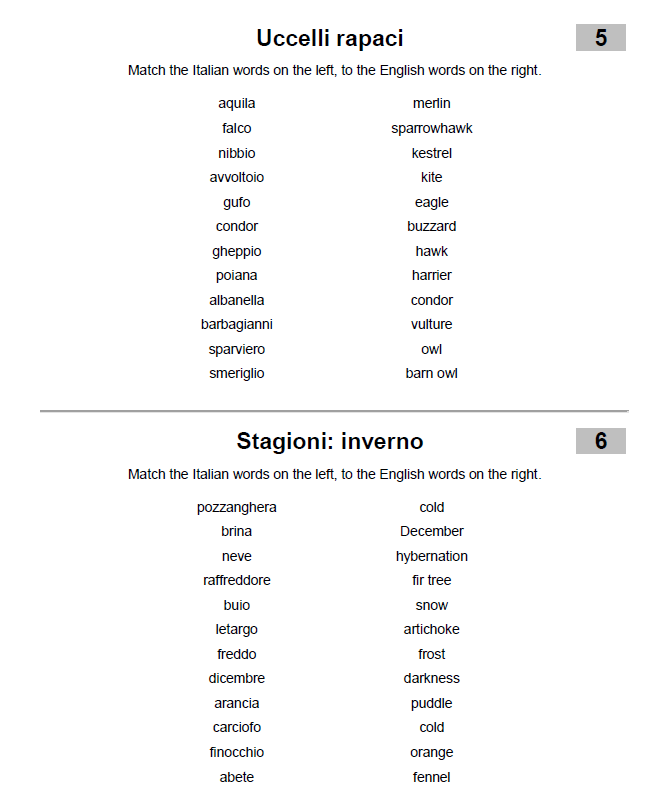
Word matches — These come in two types. The first asks you to match Italian words to their English translations, a recognition exercise. The second asks you to match Italian words to other Italian words by context, which is closer to genuine retrieval and more demanding.
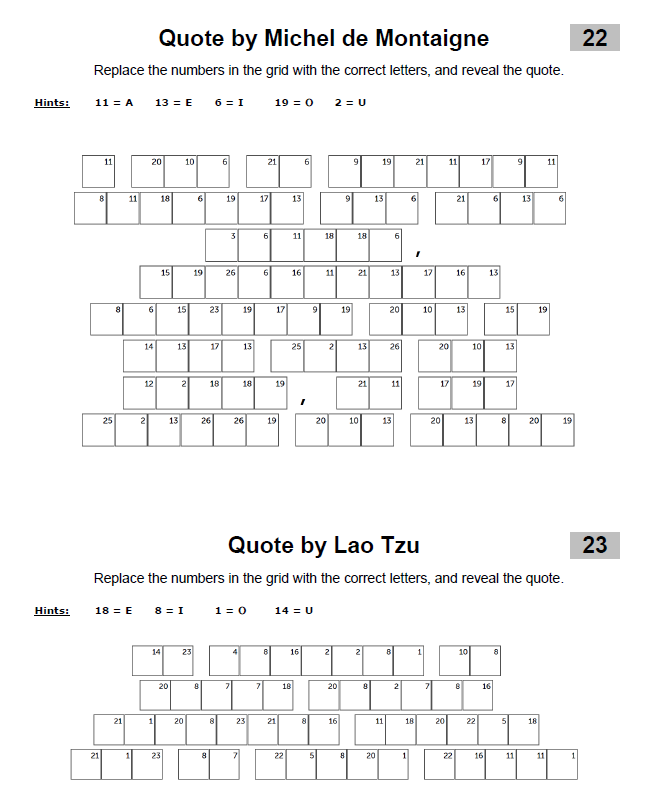
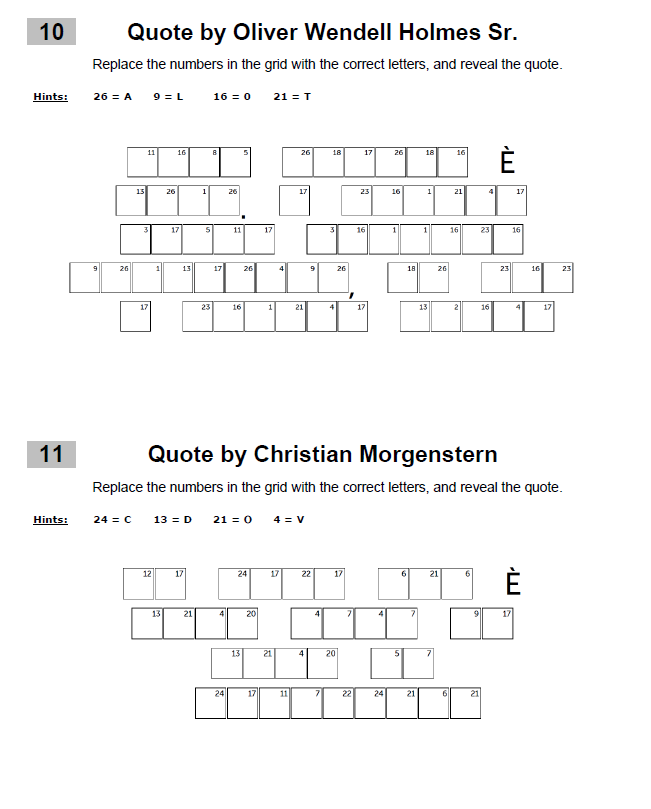
Cryptograms — Each number in the puzzle corresponds to a letter, and your task is to decode a hidden quote. Hints are provided if you need them, and you can choose how many to use. These tend to be the most challenging puzzles in the book, so they are worth saving for when you are feeling confident.
Complete solutions are included at the back of every book, organised by puzzle type, so you can always check your work without hunting through the pages.